
Support regulation first, so engagement can follow.
Regulating for Engagement helps child-focused professionals understand what is happening beneath disengagement, resistance, shutdown, or big reactions, then respond in ways that make participation more possible.
When a child’s nervous system is overwhelmed, more prompting is rarely the answer. This course helps you shift from pushing for engagement to creating the conditions where engagement can actually happen.
Start Learning NowEngagement is hard when regulation is missing
You may see children who avoid tasks, leave the group, refuse support, shut down, escalate quickly, or seem unable to stay connected.
It can look like defiance, inattention, lack of motivation, or behavior that needs to be managed.
But often, the child is not ready to engage because their body and brain do not yet feel organized enough to participate.
Regulating for Engagement gives you a more effective place to start.



A clearer way to support children before asking more from them
This course helps you recognize regulation as the foundation for attention, learning, communication, cooperation, and connection.
You will learn how to notice signs of dysregulation earlier, adjust your response, and support a child’s capacity before expecting engagement.
We're removing the barriers. By supporting children's nervous system needs first, we help them access the skills, knowledge, and potential that are already there.
What you will learn
Inside Regulating for Engagement, you will learn how to:
- Understand the link between regulation and engagement
- Recognize when a child is not available for learning or participation
- Respond to dysregulation without escalating the moment
- Support connection before correction
- Reduce power struggles by starting with nervous system needs
- Create more regulated conditions for attention, communication, and participation
- Use a regulation-first lens in real child-focused settings
This is practical support for the moments when children need more than another direction, demand, or reminder.
Who it is for
Regulating for Engagement is for child-focused professionals who want a more effective, compassionate way to support children.
It is a strong fit for educators, therapists, support staff, and other professionals who work directly with children and want to improve engagement without relying on pressure, control, or repeated prompting.
If you want to understand the child beneath the behavior and respond in a way that supports both regulation and participation, this course was created for you.
Why this approach works
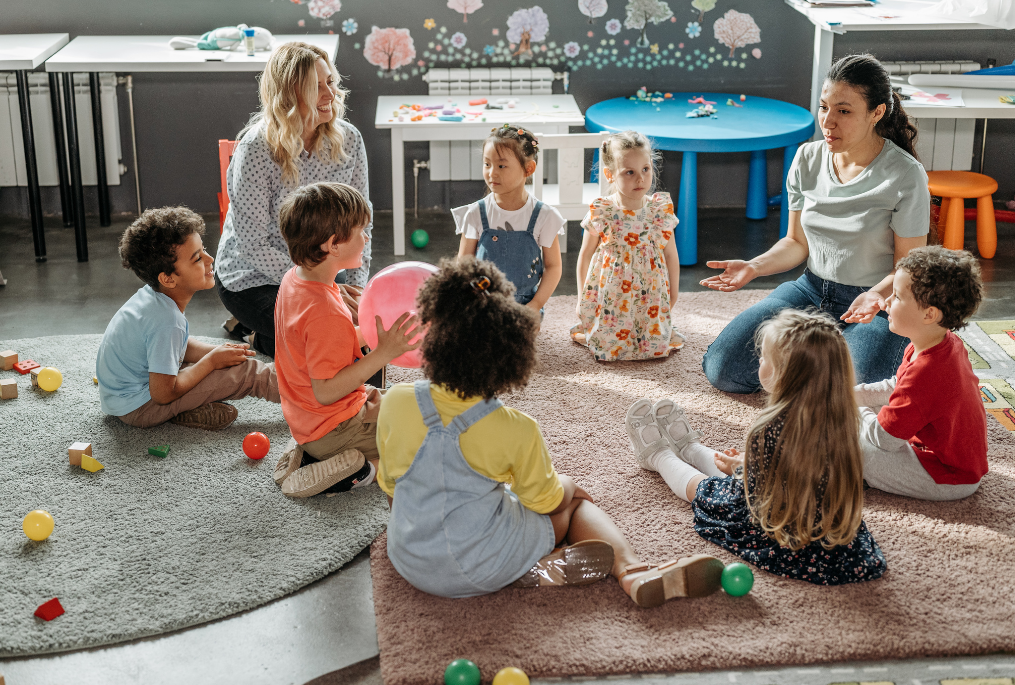
Children engage more fully when they feel safe, supported, and organized.
A regulation-first approach helps you look beyond surface behavior and ask better questions:
- Is this child able to engage right now?
- What signs of stress or overwhelm am I seeing?
- What support would help this child become more available?
- How can I reduce demand without disconnecting?
- What would make participation feel more possible?
When you change the starting point, you change the interaction.
You move from managing behavior to supporting readiness.
Course experience
Walk away with a more grounded way to respond
After this course, you will be better equipped to support children who struggle with attention, participation, cooperation, or connection because you will know how to look for regulation first.
You will have a clearer framework for deciding when to pause, when to adjust, and how to help a child become more available for engagement.
That shift can make your work feel more effective and more human.
Targeted Expertise Markers for Educators
Student Outcomes
Early Childhood Framework:
Children's learning, Development & Wellbeing - Belonging, Being & Becoming
Children have a strong sense of identity & wellbeing & are confident & involved learners, effective communicators, connected with & contribute to their world
Early Stage 1:
EME-OLC-01 communicates effectively by using interpersonal conventions & language with familiar peers & adults
PHE-SMI-01 identifies & demonstrates self-management & interpersonal skills
PHE-RRS-01 Identifies how respectful relationships & safety contribute to wellbeing
Stage 1:
EM1-OLC-01 communicates effectively by using interpersonal conventions & language with familiar peers & adults
PH1-SMI-01 describes & demonstrates self-management & interpersonal skills
PH1-RRS-01 describes & demonstrates actions that support respectful relationships & safety offline & online
Stage 2:
EN2-OLC-01 communicates with familiar audiences for social & learning purposes, by interacting, understanding & presenting
PH2-SMI-01 explains & applies self-management & interpersonal skills in a range of contexts
PH2-RRS-01 describes & applies skills to strengthen respectful relationships
PH2-IHW-01 Explains how related factors influence identity, health & wellbeing
Stage 3:
EN3-OLC-01 communicates to a wide audiences with social & cultural awareness, by interacting & presenting, & by analysing & evaluating for understanding
PH3-MSP-01 refines & applies movement skills, strategies & collaboration in physical activities
PH3-RRS-01 explains & applies skills & strategies to manage respectful relationships
PH3-IHW-01 examines & explains factors that influence identity, health & wellbeing of individuals & groups
PH3-SMI-01 evaluates & applies self-management & interpersonal skills in a range of contexts [As of June 2026]
Teacher Professional Standards
Profession Knowledge
1. Know students & how they learn
Teacher: 1.3.1; 1.5.1; 1.6.1
Proficient Teacher: 1.1.2; 1.5.2; 1.6.2
Highly Accomplished Teacher: 1.1.3; 1.2.3
Lead Teacher: 1.1.4; 1.5.4; 1.6.4
Professional Practice
4. Create & maintain supportive & safe learning environments
Teacher: 4.1.1; 4.3.1
Proficient Teacher: 4.1.2; 4.3.2
Highly Accomplished Teacher: 4.1.3; 4.2.3; 4.3.3
Lead Teacher: 4.3.4; 4.2.4; 4.3.4
[As of June 2026]